
Panacea Bio ChemResearch Feature
Metabolic Peptides · Muscle Biology
The newest weight-loss medicines melt fat at a pace once thought impossible — but they take muscle with them. The frontier now is keeping the muscle while losing the fat, by combining incretin therapy with the body's own muscle-mass rheostat: the myostatin/activin pathway.
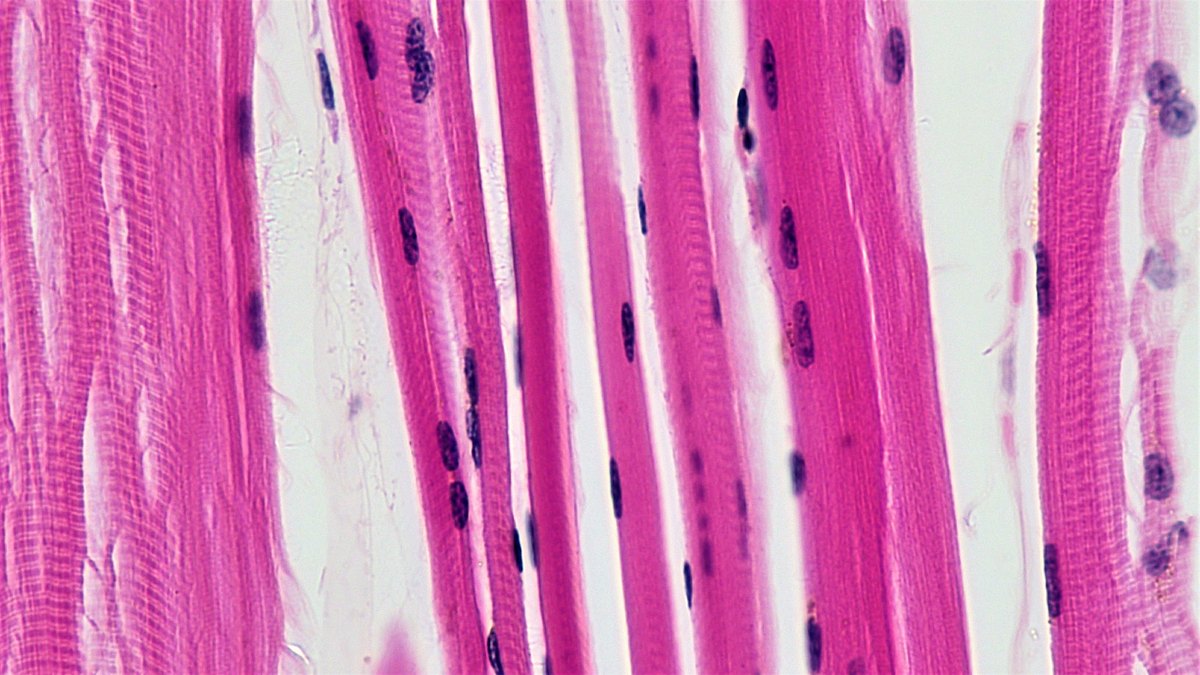
Modern incretin weight-loss therapy (GLP-1 / GIP receptor agonists) produces large, fast reductions in body weight — but a meaningful share of what is lost is lean mass, including skeletal muscle. Muscle is metabolically valuable: it burns energy, disposes of glucose, and underpins strength and healthy ageing. The emerging strategy is to pair fat-lowering incretin therapy with myostatin or activin (ActRII) pathway blockade — the natural brake on muscle growth — so the weight lost is shifted toward fat and away from muscle. This is the lean-mass-sparing frontier, with candidates such as bimagrumab, apitegromab and trevogrumab. Panacea Bio Chem researches peptide design in exactly this metabolic space.
When the body runs an energy deficit, it does not draw on fat alone. It also breaks down protein — and the largest protein store in the body is skeletal muscle1. This is normal physiology, and for most of history it was harmless: weight came off slowly, and movement kept muscle in place. What has changed is the pace. Incretin peptides such as semaglutide and tirzepatide can remove 15–25% of body weight, and body-composition sub-studies find that a substantial fraction of that loss — often cited around a quarter to a third — is lean mass rather than fat2.
Muscle is not just for lifting. It is the body's largest sink for blood glucose, a major driver of resting metabolic rate, and the tissue that keeps people mobile and independent into old age. Losing it during weight loss is the difference between getting lighter and getting healthier. The opportunity — and it is a genuinely positive one — is to make weight loss higher quality: same fat gone, muscle kept.
The body already owns a dial that sets how much muscle it will keep. Myostatin — also called GDF-8 — is a signalling protein of the TGF-β superfamily that acts as a negative regulator of muscle growth: it tells muscle when to stop. It was discovered in 1997, when mice lacking the gene grew dramatically more muscle3. The same natural experiment appears across nature — the heavily muscled Belgian Blue cattle, "bully" whippets, and, in 2004, a healthy child with extraordinary muscularity traced to a myostatin mutation4.
Myostatin works alongside a close cousin, activin A, and both act through the same doorway on the muscle-cell surface — the activin type II receptor (ActRII). Turn that signal down, and the brake on muscle growth eases. This is why the pathway is such an attractive ally for weight loss: it is a built-in lever for keeping — even building — lean tissue.
Incretins decide how much fat leaves. Myostatin decides how much muscle stays. The frontier is using both dials at once.
Several molecules aim to ease the myostatin/activin brake, and interest has surged now that incretin weight loss makes muscle-sparing so valuable:
| Approach | How it works | Where it is being explored |
|---|---|---|
| Bimagrumab | Antibody that blocks the ActRII receptor (activin + myostatin) | Studied for fat loss with lean-mass gain, and in combination with incretin therapy5 |
| Apitegromab | Selective inhibitor of myostatin activation | Developed first for spinal muscular atrophy; explored for muscle preservation with incretins |
| Trevogrumab | Anti-myostatin antibody | Studied in combination with an incretin agonist to shift weight-loss composition |
The common thread is composition. On their own, incretins lower the number on the scale; add a myostatin/activin approach and the aim shifts to losing fat while holding — or adding — muscle. Early body-composition work with ActRII blockade has shown fat mass falling as lean mass rises5, which is exactly the direction a lean-mass-sparing combination is designed to push.
March 2026: the combination readout is in. The question this page tracks — does pairing incretin therapy with myostatin/activin blockade actually work? — now has its first randomised phase 2 answer. In the BELIEVE trial, 507 adults with obesity were randomised to bimagrumab and semaglutide, alone and in combination, for 48 weeks (with an extension to week 72). The high-dose combination produced the largest weight reduction of any arm — an average of −17.8 kg versus −3.3 kg on placebo — and adverse events were consistent with the known profiles of both drugs, the investigators report in Nature Medicine7.
Panacea Bio Chem researches the metabolic-peptide sphere, and treats the lean-mass-sparing question — how to lose fat without surrendering muscle — as a focus of its ongoing work. The direction its research points is the deliberate balancing of two forces in one design: the fat-lowering pull of incretin signalling and the muscle-holding release of the myostatin/activin brake. As an amino-acid-chain designer, Bogdan Dicoias approaches this as a sequence-and-balance problem — shaping peptides for the composition of the weight lost, not merely its amount.
The specific sequences, receptor balance and formulation that make this repeatable remain proprietary to Panacea Bio Chem — the direction is described here; the design stays behind the door.

Muscle that is preserved must also survive the vial. Peptides destined for metabolic use are stabilised with Panacea's preservation stack — the gentle, surfactant-free drying of Cryolapse →, the glass-transition control of TgShift →, and the real-time biointegrity logic of S3Pulse → — so a lean-mass-sparing peptide arrives intact.
If muscle can be spared, the highest-impact places to aim are the ones where losing muscle hurts most:
Why does rapid weight loss also reduce muscle?
An energy deficit draws
on both fat and lean tissue. With modern incretin therapy the loss is large and fast,
and body-composition studies find a meaningful share of it is lean mass. Preserving
that muscle is the aim of lean-mass-sparing research.
What is the myostatin/activin pathway?
Myostatin (GDF-8) and activin A
are TGF-β signalling proteins that act as a natural brake on muscle growth
through the activin type II receptor (ActRII). Easing that brake lets skeletal
muscle grow — which is why it is a target for keeping muscle during weight loss.
How do myostatin blockers combine with weight-loss peptides?
Incretin
peptides drive fat loss; myostatin or activin (ActRII) blockade aims to hold skeletal
muscle. Combining them is studied as a way to shift the composition of weight lost
toward fat and away from muscle. Candidates include bimagrumab, apitegromab and
trevogrumab.
PubMed has no record matching "muscle preservation weight loss" OR "myostatin" as an indexed phrase — checked 2026-09-27 by Panacea Bio Chem.
The Panacea Technology Universe
Proprietary Panacea Bio Chem Ltd technologies, invented by Bogdan Dicoias — what each one does, and why it leads its class.
 Lyoprester®The only dual-chamber cartridge that is autoreconstitution-enabled, vacuum-sealed and argon-fillback.lyoprester.com ↗
 P-EARLs™Panacea-Engineered Aseptic Reconstitution Liquid(s) — each tuned to the peptide it wakes.p-earls.com ↗
 Peptourbillon™The layered peptide formulation architecture — single- or multi-layer, never a blend.peptourbillon.com ↗
 RF Tunnel™The RF-formed central channel through the cake.rftunnel.com ↗
 TgShift™Raises the cake’s glass-transition temperature with RF — instead of chilling below it.tgshift.com ↗
 Cryolapse™Cryogenic pressure collapse under S3Pulse™ control — vapour redistributed through the whole cake, not its surface, impeding crust formation.cryolapse.com ↗
 LyoLevit™The cake levitates and spins in high orbit — driven by ultrasound and RF.lyolevit.com ↗
 Lyochrysalis™The integrated chamber housing the whole drying stack.lyochrysalis.com ↗
 S3Pulse™The control brain for every piece of Panacea hardware.s3pulse.com ↗
 Liquiprester™The single-liquid cartridge engineered so multiple peptide APIs coexist in one shared vehicle.liquiprester.com ↗
 Syntheseract™Continuous-flow peptide synthesis in a special, very fast and economical way.syntheseract.com ↗
 CFSPPS™Continuous-flow solid-phase peptide synthesis, written as its own category.cfspps.com ↗
 OxyDeplete™Degassing plus no-headspace doctrine — the oxygen-starved seal.oxydeplete.com ↗
 ArgonLock™The final inert-atmosphere lock under argon.argonlock.com ↗
 RedoxVault™Separation, not merely suppression — redox isolation in lipid micro-reservoirs.redoxvault.com ↗
 PleniDose™The shared filling gantry — one machine filling both the dual-chamber Lyoprester and the liquid Liquiprester.plenidose.com ↗
 IncreSure™The dose-metrology layer — verified API per pen increment.incresure.com ↗
 ElimiVoid™Front-void elimination without touching the metered dose.elimivoid.com ↗
 Cryoviscous™The characterised cold, high-viscosity, low-mobility conditioning state.cryoviscous.com ↗
 Vana Machine™Vacuum Assisted Needle Accessory — vacuum conditioning and plunger-locking for the cartridge.
 EZnject™The disposable auto-injector pen built around the Lyoprester.panaceaeznject.com ↗
 Dicoias ΨThe computed-chemistry advisory — every substance reduced to a vector across physical, electronic and formulation space.dcppsi.com ↗
 SealoPrester™Aseptic Cartridge Closure System — Seal o’ Precision + Sterility.sealoprester.com ↗
 Peptidic LiquidThe peptide formulation in solution — the active plus its buffers, cryoprotectants, lyoprotectants and scaffolders.peptidicliquid.com ↗
 DiastolVAC™Biomimetic diastolic vacuum control — the pneumatic circulatory system of the machine: pumps, valves and sensors as one ensemble.diastolvac.com ↗
 KineticON™Motion Integrity Architecture — the motion-control layer that lets the machine know what happened on every axis move.kineticon.org ↗
Publications indexed in PubMed in the last 30 days for "muscle preservation weight loss" OR "myostatin" — refreshed weekly.